

Seven framed prints can make the blank wall above a sofa look finished, but the art you see is only half the purchase. Glazing, backing, tax, shipping, replacement parts, and safe hanging hardware can turn an appealing $500 plan into an unfinished $900 project. An attractive seven-piece gallery wall can stay within $800, provided the budget treats secondhand frames as unverified components and spends unequally across the arrangement.
Key takeaways
- Count artwork, frames, mats, glazing, backing, fitting, hardware, tax, delivery, and contingency within the same $800 boundary.
- Spend more on one anchor print and reserve targeted preservation materials for the most vulnerable work.
- Reject secondhand frames with structural damage, moisture, mold, pests, or unsafe glazing, regardless of their decorative appeal.
- Use paper templates and verified finished weights before choosing hardware or making holes.
- Keep a retail fallback and contingency because secondhand frame sizes and conditions are irregular.
Contents
- Defining the complete $800 budget
- Dividing the art allowance
- Inspecting secondhand frames
- Choosing preservation materials
- Pricing the renter-friendly build
- Pricing the preservation-focused build
- Laying out and installing the wall
What does an $800 gallery wall budget include in the United States?
For a U.S. buyer, the $800 cap must cover the art, frames, mats, glazing, backing, fitting, hanging hardware, delivery or pickup, sales tax, and contingency. Count only the seven visible pieces, and the plan may fail as soon as a frame arrives without usable glazing.
This worked example uses the Chicago, Illinois, market and a planning date of February 20, 2025. It places seven works above an 84-inch sofa on a 12-foot-wide, 8-foot-high drywall wall. The print sizes are one 18-by-24-inch anchor, two 11-by-14-inch prints, two 8-by-10-inch prints, and two 5-by-7-inch prints. Larger matted frames create a finished arrangement about 72 inches wide by 44 inches high.
The $800 cap must use one consistent cost boundary
- Artwork: $240 allowance. Count the delivered cost of each print, including any seller shipping charge.
- Secondhand and retail fallback frames: $180 allowance. Give existing mats, glazing, backing, and hardware no value until inspection confirms that each component is usable.
- Mats, glazing, backing, and fitting: $180 allowance. Keep bundled components with the item that supplied them rather than counting artificial savings elsewhere.
- Hanging hardware: $40 allowance. Hardware must match the known wall type and verified finished frame weights.
- Shipping, delivery, or local pickup: $80 allowance. Fuel and parking for a dedicated pickup trip belong here.
- Contingency: $80 allowance. This reserve covers missing sizes, damaged parts, and other documented substitutions.
These initial buckets guide planning; they are not purchase quotations. Count sales tax at the amount each seller charges and absorb it within the relevant bucket or contingency. The budget excludes reusable household tools and the buyer’s labor. A paid installer, new drill, wall repair, or furniture-moving service would require a separate allowance or a reduction elsewhere.
A contingency protects the gallery wall from missing sizes and damaged components
The $80 contingency equals 10 percent of the cap and is not upgrade money. It can replace cracked glazing, add missing backing, cover a retail frame when the required secondhand size never appears, or absorb a higher delivery charge. Charge every receipt to its assigned category first, then to the contingency. The reconciled total still cannot exceed $800.
Availability is the limitation. A thrift shop may have three excellent 11-by-14-inch frames and no sound frame for the anchor. The plan therefore needs both retail fallbacks and enough reserve to use them. With the cost boundary fixed, the next decision is which prints deserve more of the art allowance.
Which art prints deserve more or less of the gallery wall budget?
Choose the seven prints by visual role, standard sheet size, delivered cost, replaceability, and light sensitivity. One anchor image can take a larger share, while six supporting art prints remain inexpensive enough to protect the framing reserve.
Standard print sizes make secondhand framing easier
Narrow the art search by frame compatibility before placing an order. This seven-piece mix uses familiar dimensions, with every amount treated as a planning allowance rather than a captured listing price:
- Anchor: one 18-by-24-inch print, up to $90 delivered. A large portrait, landscape, or bold abstract establishes the composition.
- Color bridge: one 11-by-14-inch print, up to $35 delivered. Its palette connects the anchor to the smaller works.
- Quiet counterweight: one 11-by-14-inch print, up to $30 delivered. A restrained photograph or drawing keeps the wall from feeling uniformly loud.
- Vertical accent: one 8-by-10-inch print, up to $25 delivered.
- Graphic accent: one 8-by-10-inch poster print, up to $20 delivered.
- Small detail: one 5-by-7-inch print, up to $20 delivered.
- Small contrast: one 5-by-7-inch print, up to $20 delivered.
The working art total is $240 delivered. Check the sheet size rather than the pictured image area before checkout. Record the paper description, edition status, availability, and shipping charge. A $40 print with $18 shipping enters the ledger as a $58 purchase.
A mat can fit a small sheet into a larger standard frame, but the rabbet still needs enough depth for the glazing, mat, artwork, and backing. An unusual sheet size is economical only when a suitable used frame has already been found.
The anchor print can cost more without consuming the framing reserve
The anchor receives a ceiling of $90 delivered, while the six supporting prints share $150. This unequal split creates hierarchy without assuming every work needs identical spending. A vulnerable signed print on delicate paper may justify the anchor allowance. Replaceable poster prints can supply color and rhythm for less.
Light exposure matters more than price alone. Keep vulnerable paper out of direct sunlight and assess the room before buying framing upgrades. If the display also needs a new bulb, treat that purchase as a separate lighting cost rather than hiding it in the art allowance. ENERGY STAR states that qualified LED lighting uses at least 75 percent less energy and lasts up to 25 times longer than incandescent lighting, where qualified bulbs or fixtures apply, according to its LED lighting guidance.
Once the print sizes and delivered costs fit the plan, check whether the available secondhand frames are safe enough to reuse.
Which secondhand frames are safe enough for an $800 gallery wall?
Secondhand frames can carry most of the wall when their joints are sound, their profiles lie flat, and their rabbets can hold every component. Reject warped, moldy, pest-damaged, or structurally loose frames, however appealing the finish looks. Cosmetic wear is usually the safer compromise.
A secondhand frame needs structural inspection before cosmetic repair
- Pass: Tight corner joints, a flat profile, adequate rabbet depth, intact glazing, and secure hanging points. Small scratches, worn gilding, and removable surface dirt do not necessarily weaken the frame.
- Repair: Loose backing, missing turn buttons, tired wire, or a minor joint gap may justify a modest repair allowance. A framer should assess failed miters, cracked glazing, and rabbets that require alteration.
- Reject: Severe twist, crumbling ornament, active pests, persistent musty odor, moisture staining, visible mold, or deeply rusted fasteners touching the framed package.
Remove old nails, points, and glass only on a stable work surface with eye and hand protection. Take special care with damp porous parts. The U.S. Environmental Protection Agency recommends drying wet materials within 24 to 48 hours to reduce the likelihood of mold growth when the materials can be dried safely. Visibly contaminated backing should not enter the room with clean artwork.
Existing glazing and backing should not be counted until verified
Record each frame’s opening, outside dimensions, rabbet depth, glazing material, backing, hardware, condition, and asking price. Give included glass or acrylic zero value until it fits, lies flat, and has no dangerous chips or distracting scratches. Treat brittle cardboard, stained backing, and unknown mats as disposal items rather than savings.
Which secondhand frames are safe enough for an $800 gallery wall shown with practical context cues.
This pass, repair, or reject test separates a genuine bargain from a decorative repair project. It also identifies the one print, if any, that deserves better matting, backing, attachment, or glazing.
When do art prints need better mats, backing, or UV-filtering glazing?
Assign preservation materials by vulnerability and replaceability rather than spreading them evenly. A light-sensitive, signed, limited, or hard-to-replace print may justify better matting, backing, attachment, and glazing. An inexpensive poster that remains readily available may need only clean, sound framing. For related context, review compare professional proposals and their exclusions.
The most vulnerable print should receive the preservation budget first
- Replaceability: Favor the print that cannot be reordered easily. Record the seller, edition information, availability, and delivered replacement cost rather than assuming that every signed print is scarce.
- Paper and printing process: Give added protection to delicate paper, unstable media, or a print whose material description calls for cautious handling. Ask the seller or framer when the process is unclear.
- Display location: Avoid direct sunlight, water risk, excessive humidity, and unstable temperature. The Library of Congress guidance for works on paper recommends a cool, relatively dry, stable environment during display and storage.
- Attachment: Keep pressure-sensitive tape and permanent adhesive away from artwork that may need removal. Ask a qualified framer to specify an appropriate reversible attachment method.
- Material descriptions: Require documentation for claims such as acid-free, lignin-free, conservation, or UV-filtering. The National Park Service Museum Handbook provides a conservative reference for collections preservation, not proof that every residential poster needs museum treatment.
Ask for a written estimate that lists the mat, backing, attachment, glazing, fitting, assembly, hardware, and delivery separately. A package total hides the incremental cost of protecting one print and makes competing estimates difficult to compare.
Replaceable poster prints do not automatically require premium glazing
Standard glazing creates a physical barrier against handling and household dust, but it should not be presented as complete protection against fading. UV-filtering glazing reduces part of the exposure. It does not make direct sunlight or poor display conditions safe. Move the frame first, then decide whether the glazing upgrade still addresses a meaningful risk.
- Use simpler framing when a poster remains inexpensive to replace, the room receives no direct sun, and the planned display period is limited.
- Upgrade backing or glazing when replacement is difficult, light exposure cannot be reduced sufficiently, or the print is unusually sensitive.
- Reject damp, musty, or contaminated backing rather than enclosing it with clean artwork.
- Ventilate the room while refinishing frames with emitting paints, varnishes, waxes, or cleaners.
The U.S. Environmental Protection Agency identifies paints, varnishes, waxes, cleaning products, building materials, and furnishings as common indoor sources of volatile organic compounds. The agency recommends increased ventilation while using products that emit those compounds indoors.
Reserve premium treatment for the print that needs it most to keep both $800 versions possible. The renter-friendly build puts the remaining money toward flexibility and a larger reserve.
What does the renter-friendly $800 gallery wall cost item by item?
The renter-friendly build stays at $800 by pairing seven prints with inspected secondhand frames, replacing only failed components, and reserving money for low-damage installation. The figures below are worked U.S. planning allowances, not seller listings or written quotations.
- Seven art prints, delivered: $240
- Frames 1 through 7: $42, $32, $28, $24, $22, $20, and $18
- Replacement mats: $50
- Lightweight glazing where needed: $60
- Clean backing and frame fasteners: $28
- Hanging hardware: $32
- Delivery or pickup: $40
- Sales-tax allowance: $42
- Contingency: $122
- Reconciled total: $800
Renter-friendly hardware must match the wall and finished frame weight
The worked wall is painted drywall over wood studs. The lease permits small pin holes if patched and repainted, prohibits large anchors without consent, and allows removable adhesives only on compatible paint.
Record the finished weight of each frame after installing the glazing, backing, artwork, and hanging hardware. Choose every hook or strip according to the manufacturer’s load rating, compatible surface, preparation steps, waiting period, frame-profile limits, and removal instructions. Select capacity above the measured load. If adhesive hardware conflicts with the paint or frame profile, use lease-permitted picture hooks instead.
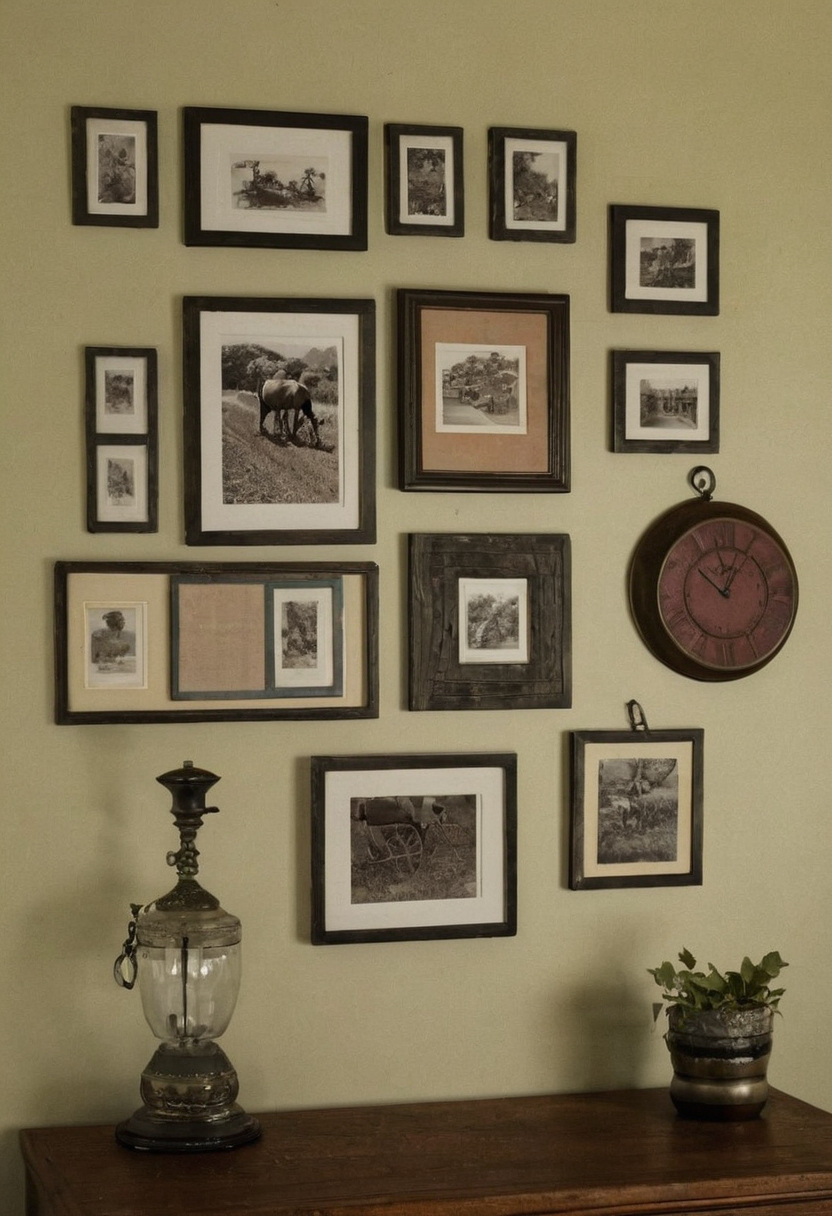
What does the renter-friendly $800 gallery wall cost item by item shown with practical context cues.
The renter-friendly version saves on reversibility, not basic safety
The savings come from keeping sound glazing, mats, and backing rather than replacing every component. Secure joints, enclosed backs, suitable fasteners, and safe attachments remain mandatory. No print receives pressure-sensitive tape or permanent adhesive. Reject damp or musty components because cleaning alone cannot solve an active moisture source, the central issue identified in EPA mold guidance.
The $122 reserve covers an unsuitable frame, an additional pickup, changed hardware, or a retail fallback. The preservation-focused build uses more of that flexibility to protect one vulnerable print.
What does the preservation-focused $800 gallery wall cost item by item?
The preservation-focused version keeps the same seven-piece wall and cost boundary but directs better matting, backing, attachment, and UV-filtering glazing to one vulnerable print. It saves on the six replaceable posters, never on secure hardware or sound frame assembly.
- Seven art prints, delivered: $225
- Six secondhand frames and one retail fallback: $155
- Standard mats, glazing, and backing for six replaceable prints: $70
- Targeted treatment for the vulnerable print: $145
- Hanging hardware for verified finished weights and wall type: $35
- Pickup or local delivery: $45
- Sales-tax allowance: $45
- Contingency for damaged or missing components: $80
- Reconciled total: $800
The budgets work on paper only if the seven frames can be positioned and installed without last-minute hardware purchases or wall repairs.
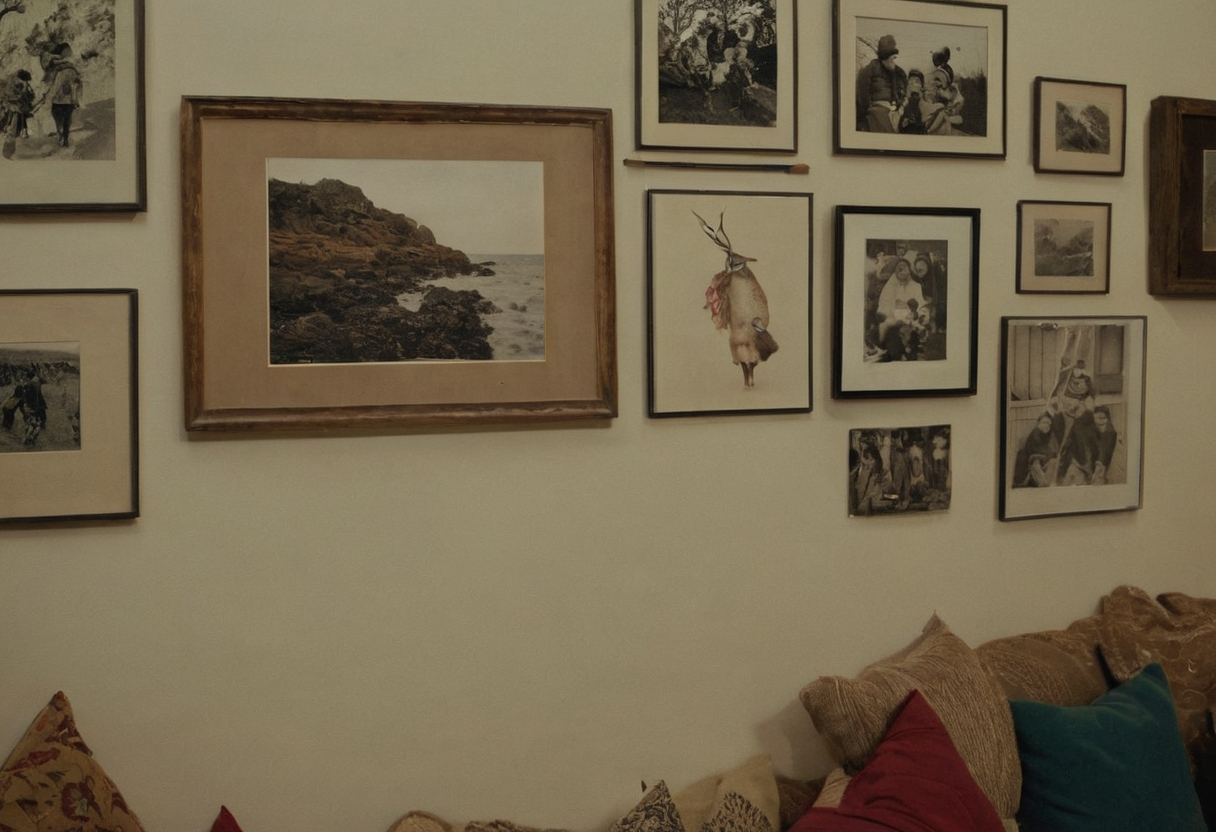
What does the preservation-focused $800 gallery wall cost item by item shown as an editorial planning reference.
How should the gallery wall be laid out and installed without overrunning the budget?
Arrange the seven frames on the floor and test the composition with paper templates before making holes or applying adhesive hardware. Measure against the actual wall and sofa, verify every finished frame weight, and install from one fixed reference point with hardware suited to the wall surface and load.
Cut seven templates to the outside-frame dimensions: one 24-by-30-inch anchor, two 18-by-24-inch frames, two 12-by-16-inch frames, and two 11-by-14-inch frames. A consistent 3-inch gap gives the mismatched frames breathing room without turning them into isolated pictures. Mark the sofa edges, switches, vents, wall boundaries, and other obstructions before approving the footprint.
- Unpack every frame and inspect the glazing, joints, backing, and artwork before discarding the packaging.
- Weigh each completely assembled frame, including its glazing and hanging hardware.
- Arrange the frames on the floor, then transfer their outlines and hanging points to paper templates.
- Place the anchor template first and center the full composition over the sofa. Check it from the room entrance and from the seated position.
- Confirm whether each attachment enters drywall, plaster, masonry, or a stud. Select compatible hardware with a load rating above the verified weight.
- Install the anchor first, followed by the two 18-by-24-inch frames and then the four smaller frames. Recheck the 3-inch spacing after each addition.
- Level the frames, secure any suitable lower restraints or bumpers, and remove the templates after every attachment holds.
- Reject cracked glazing, spreading joints, frayed wire, loose fasteners, or damp backing.
- Confirm that no frame rocks, slips, or touches a switch, vent, or wall edge.
- Reconcile artwork, frames, materials, hardware, tax, and delivery against the ledger.
- Record the actual total, substitutions, and unused contingency rather than treating the reserve as money still available for decoration.
The finished gallery wall succeeds when the composition looks deliberate, every attachment suits its load, and unequal spending has protected the work that needed it most. The $40 print can be the right purchase. The costly mistake is not choosing inexpensive art. It is spending without accounting for the less visible parts that make the wall safe and complete.
Frequently asked questions
Can a complete gallery wall with art, frames, glazing, and hardware stay under $800?
Yes, if the $800 boundary includes every visible and hidden cost from the beginning. The plan requires inexpensive supporting prints, inspected secondhand frames, selective component replacement, and a contingency for irregular availability.
How can I tell whether a secondhand frame is safe to reuse?
Check for tight joints, a flat profile, adequate rabbet depth, intact glazing, clean backing, and secure hanging points. Reject frames with severe warp, mold, moisture staining, pests, crumbling ornament, dangerous glass, or structural movement.
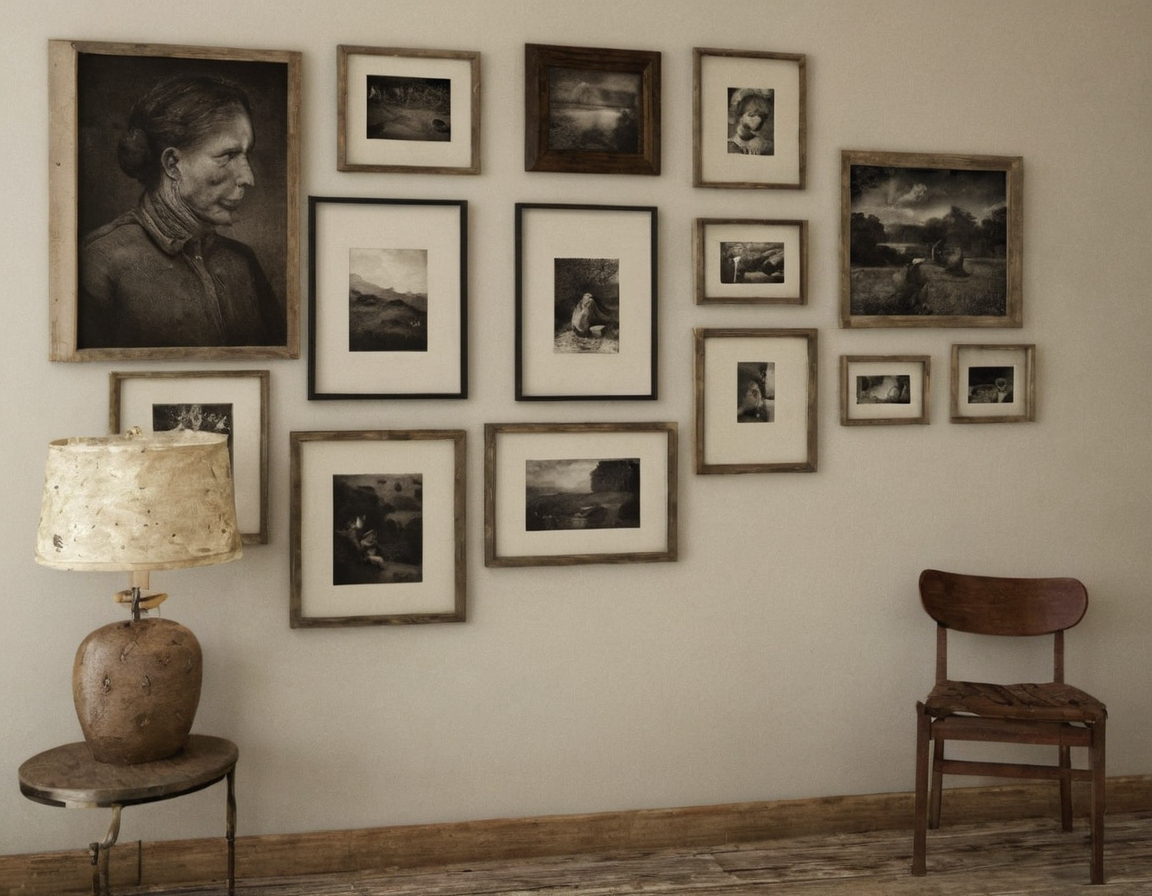
How should the gallery wall be laid out and installed without overrunning the budget shown as an editorial planning reference.
Do inexpensive art prints need UV-filtering glazing and conservation mats?
Not automatically. Base the decision on light exposure, paper sensitivity, replacement difficulty, and expected display duration. A readily replaceable poster in a suitable location may need only clean, sound framing.
What gallery wall hardware can renters use without damaging the wall?
The correct hardware depends on the lease, wall surface, paint condition, frame profile, and verified finished weight. Follow the hardware manufacturer’s complete preparation, load, installation, and removal instructions. Obtain consent before using anchors or other attachments prohibited by the lease.
Should every print in a gallery wall receive the same level of framing?
No. Equal treatment can waste a limited budget. Give the most vulnerable or difficult-to-replace print better materials, while using simpler sound framing for replaceable poster prints.